

Last Updated: October 25, 2026
Quick Summary
An elegant home atmosphere is intentional, calm, and refined where colors don't clash, lighting feels warm, textures invite touch, and order sits beneath comfort. Create it by starting with restraint, using neutral tones as your canvas, layering textures and quality materials, and implementing warm, multi-layered lighting throughout your space.
- Neutral tones like creams, soft grays, and warm beiges create visual calm and make rooms feel larger.
- Layer multiple light sources at different levels and use warm 2700K bulbs with dimmer switches for mood control.
- Mix refined materials like linen, velvet, silk, and leather rather than using only one for sophistication.
- Candles grouped in odd numbers and room sprays add fragrance that completes an elegant atmosphere.
- Prioritize spending on lighting, seating, and daily-use surfaces before decorative objects at any budget level.
Table of Contents
- Understanding the Foundation of an Elegant Home Atmosphere
- Elegant Home Decor Ideas: Start with Color and Neutral Tones
- Build Visual Depth Through Texture and Refined Materials
- Home Lighting Ideas for a Cozy Atmosphere
- How to Use Home Fragrance to Enhance Your Space
- How to Make a Home Feel Welcoming with Wall Details and Finishing Touches
- Decluttering and Editing for a Professionally Styled Finish
- Room-by-Room Application and Budget Tiers
- Frequently Asked Questions
Understanding the Foundation of an Elegant Home Atmosphere
An elegant home atmosphere is intentional, calm, and refined without being cold, where colors don't clash, lighting feels warm, textures invite touch, and order sits beneath the comfort.
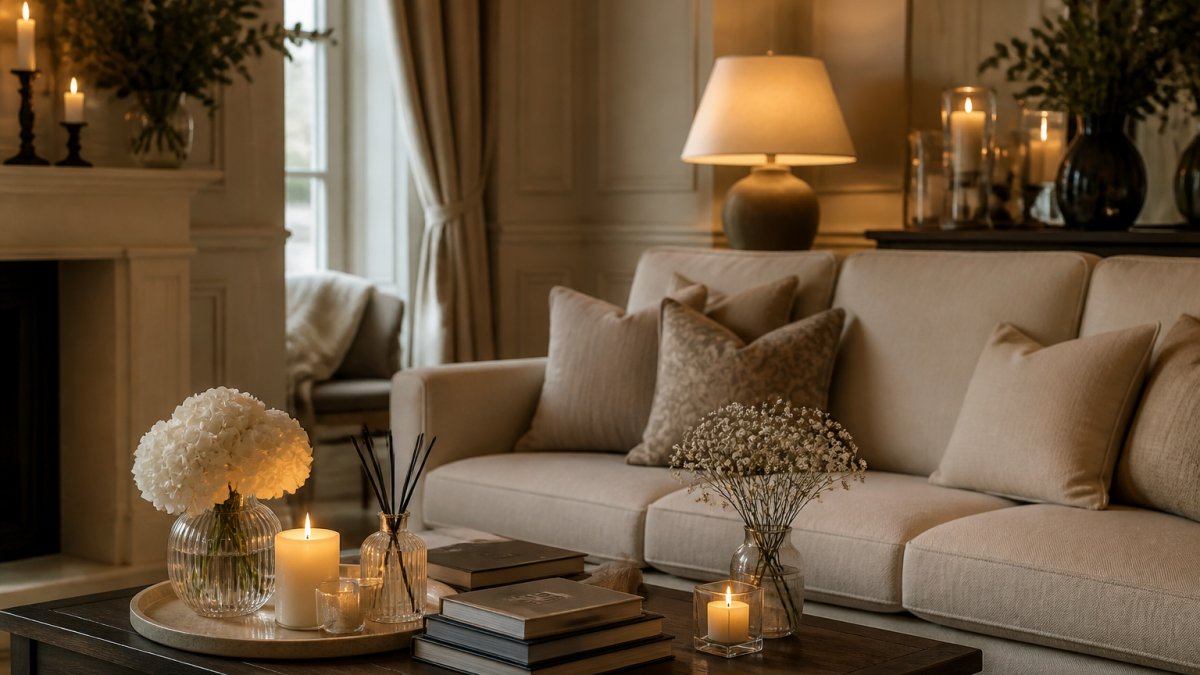
An elegant home begins with restraint.
Elegant Home Decor Ideas: Start with Color and Neutral Tones
Your color palette sets the mood. Neutral tones aren't boring, they're the canvas that lets texture, light, and accents shine.
Choose neutrals that feel warm, not sterile: warm whites with cream undertones feel inviting, cool whites clinical.
Beyond walls, neutral tones work in:
- Upholstered furniture and seating
- Large area rugs
- Window treatments and curtains
One accent color works well. A deep jewel tone, a soft sage, or a warm terracotta can anchor a room without overwhelming it.
Build Visual Depth Through Texture and Refined Materials
Texture transforms a neutral room from plain to sophisticated, creating visual interest and making a room feel more expensive than it is. It also engages the senses: rich textures make people unconsciously feel more comfortable and stay longer.
Layering Rugs and Soft Furnishings
Start with a large neutral base rug to anchor the seating area, then layer a smaller rug on top in a complementary texture, natural jute or a subtle pattern, for depth without clashing.
Soft furnishings do most of the heavy lifting: throw blankets over sofas, layered pillows in varying textures, and curtain panels that puddle slightly on the floor all add richness.
When layering, stick to your neutral palette and let texture variations do the work:
- Wool next to linen
- Velvet next to cotton
- Silk next to natural fibers
Selecting Linen, Velvet, Silk, and Leather
These materials signal quality and refinement. Each brings something different to a space.
Linen feels casual but elegant; its slight wrinkles add character. Use it in curtains, upholstery, or bedding.
Velvet adds luxury and depth.
Silk brings shine and movement. Silk pillowcases, throws, or curtains reflect light and add glamour without being obvious.
Leather conveys durability and timelessness. A leather chair or ottoman grounds a room and improves with age.
Home Lighting Ideas for a Cozy Atmosphere
Lighting is the secret weapon of elegant spaces. Good lighting makes imperfect spaces feel intentional; most homes rely on one overhead fixture, which is why they feel harsh and uninviting.
Elegant lighting layers multiple sources at different levels and intensities, giving you control over the mood and function of each room.
Warm, Soft Light and Ambient Lighting
Warm light (2700K) feels welcoming and flattering; cool light (4000K and above) feels clinical, save it for kitchens and workspaces, not living areas.
Create layers of light:
- Ambient: Soft overhead or wall-mounted fixtures that fill the room gently
- Task: Focused light for reading or working
- Accent: Directional light that highlights art or architectural details
Dimmer switches are essential, letting you adjust the mood throughout the day: bright light for morning energy, softer light for evening relaxation.
Candles and Decorative Accents
Candles are non-negotiable in an elegant home. They provide soft, flickering light no electric source can replicate, and the warmth feels genuine because it is.
Group candles in odd numbers (three or five) at varying heights for visual interest.
Fairy lights or string lights in warm tones add whimsy without feeling childish. Drape them loosely around mirrors or along shelving for subtle ambient light.
How to Use Home Fragrance to Enhance Your Space
Fragrance is the invisible layer that completes an elegant atmosphere. Scent triggers memory and emotion more directly than any other sense.
At Emessa Pure, we believe fragrance should enhance, not announce itself. A room should smell fresh and inviting, not like a perfume counter.
Layer scents naturally: candles provide one source, room sprays another, together creating a cohesive olfactory experience. You can also learn to make your own elegant room sprays through a dedicated course.
Our Golden Amber Room Spray works beautifully in evening spaces. For lighter, fresher spaces, the Lavender Glow Room Spray brings calm sophistication with French lavender and vanilla orchid. Or explore Room Spray Andalus, which blends exotic tuberose with bright citrus for an uplifting, elegant effect.


Choose scents that match the mood you want: warm spices and resins feel luxurious and grounding, fresh florals uplifting and refined, and citrus clean and energetic.
How to Make a Home Feel Welcoming with Wall Details and Finishing Touches
Walls are the largest surface in any room, yet most people leave them blank. Adding character elevates the space, choose details that suit your architecture and budget, and know which are reversible if you rent.
Wall Moldings, Wallpaper, and Built-Ins
Crown molding draws the eye upward and adds architectural interest; simple, clean lines are more contemporary and still elegant.
Wallpaper brings pattern and personality without the commitment of paint. Choose subtle patterns in neutral tones, geometric prints, textured weaves, or tonal florals, and avoid busy patterns that compete for attention.
Built-in shelving or cabinetry creates a curated, finished look; even one wall of built-ins makes a room feel intentional. Style them thoughtfully: books, objects, and negative space create visual balance.
Rental-friendly wall details deserve their own mention because they let you claim the look without renovating:
- Removable wallpaper on a single accent wall
- Peel-and-stick wainscoting panels or picture-frame molding kits
- Tension rods and renter-safe hooks for artwork and mirrors
Hardware and Refined Details
Hardware is the jewelry of a room. Cabinet handles, door knobs, and light switches get noticed, so choose finishes that complement your palette, brass, matte black, brushed nickel, or oil-rubbed bronze. Consistency makes the space feel cohesive.
Standardize on one finish family and one or two shapes (for example, a bar pull on drawers and a round knob on doors) so the room reads as intentional rather than collected. For renters, swapping cabinet hardware is one of the most reversible upgrades available, keep the original pieces labeled and stored so you can restore them at move-out.
Finishing touches, picture frames, mirrors, decorative objects, should be minimal and meaningful; a few carefully chosen pieces feel curated, many feel cluttered. Hang artwork so its center sits roughly at eye level (about 57-60 inches from the floor), and leave breathing room between frames.
Decluttering and Editing for a Professionally Styled Finish
This is where most people struggle. Elegance requires editing: a professionally styled room has breathing space, and nothing competes for attention.
Start by removing everything that doesn't serve you. If an object doesn't bring you joy or serve a function, it goes.
A common mistake is keeping too many decorative objects visible. Style surfaces with a few key pieces, then store the rest.
Room-by-Room Application and Budget Tiers
Different rooms need different approaches: the bedroom requires calm, the living room should invite gathering, and the entryway sets the tone for the whole home. Work through them in sequence so the result feels cohesive rather than pieced together.
A Cohesive Design Process, Room by Room
A practical sequence most designers follow:
- Define the mood for the whole home in one sentence (for example, "calm, warm, and uncluttered").
- Set a shared palette, two or three neutrals plus one accent, and carry it across rooms.
- Choose finishes and materials (flooring, hardware, fabrics) that repeat from room to room.
- Layer lighting in every room before styling.
- Style and edit last, once the bones are in place.
With that sequence in mind, here is how each room applies it:
Entryway: This is your first impression. Invest in a console table, a mirror, and good lighting. Add a room spray to greet guests with fragrance. Keep it minimal and organized. A small tray for keys and mail prevents the pile-up that undermines an elegant look.
Living Room: Layer lighting, add texture through rugs and pillows, and choose a few statement pieces.
Bedroom: Prioritize soft lighting, quality bedding, and calming scents. The Lavender Glow Room Spray works especially well here for its soothing properties.
Bathroom: Lighting and fragrance transform bathrooms. A candle and room spray create spa-like elegance. Keep surfaces clear for a clean, sophisticated feel.
Kitchen: This room benefits from good task lighting and organized storage. Elegance here comes from restraint and function.
Budget Tiers and Prioritization
A clear priority list helps you decide where to spend and where to save:
Low budget, start here:
- Warm, dimmable bulbs and a couple of lamps
- Neutral paint or a single removable wallpaper accent wall
- Throws, pillows, and a layered rug in your existing palette
Medium budget, build depth:
- One or two quality furniture pieces (a sofa or accent chair)
- Curtain panels that reach the floor
- Hardware swaps on cabinets and doors
Higher budget, finish the bones:
- Crown molding or picture-frame wall details
- Built-in shelving or cabinetry
- Upholstery in linen, velvet, or leather
A simple rule: spend first on what you touch and see daily, lighting, seating, and the surfaces you use, and save on decorative objects that can be rotated or replaced. Elegant spaces feel intentional because they're edited, not because everything is expensive.
Small Spaces, Rentals, and Sensory Comfort
Elegance should work in the home you actually have:
- Small spaces: Use one large rug rather than several small ones, keep the palette tight, and choose furniture with visible legs to create a sense of floor space. Mirrors opposite a window bounce light and make rooms feel larger.
- Rentals: Favor reversible changes, removable wallpaper, tension rods, plug-in wall sconces, slipcovers, and hardware swaps. Keep original pieces stored so you can restore the unit at move-out.
- Sensory comfort: Choose warm (2700K) dimmable lighting to reduce glare, and offer unscented candles or a lightly scented option alongside fragrance so guests with sensitivities can opt out. Soft textiles and rugs also absorb noise, which makes a room feel calmer.
Prioritize your spending on elements that matter most to create elegance at any budget level.
| Budget Tier | Where to Spend | Key Elements |
|---|---|---|
| Low budget | Lighting, textiles, fragrance | Warm bulbs, throws, pillows, room spray |
| Medium budget | Furniture and window treatments | Quality seating, floor-length curtains, hardware |
| Higher budget | Structural and upholstery | Molding, built-ins, linen, velvet, leather |
Frequently Asked Questions
What makes a home look elegant without spending a lot?
Focus on editing and layering rather than buying new items. Remove clutter to create breathable space, choose a neutral color palette in whites, creams, and soft grays, and layer affordable textures like linen throws and area rugs. Invest in one or two refined pieces like a quality candle or room spray, which immediately elevate a space. Warm, soft lighting and decluttering cost nothing but transform atmosphere dramatically.
How can home fragrance make a space feel more inviting?
A carefully chosen fragrance creates an immediate sensory welcome. Room sprays like Lavender Glow or Golden Amber introduce warmth and comfort, signaling hospitality. Spray lightly over linens, curtains, and soft furnishings so guests experience a subtle, layered scent. Fragrance works best when paired with clean, decluttered spaces and soft lighting, creating a cohesive elegant atmosphere. Choose scents with warm base notes like amber or cedarwood for a sophisticated, inviting feel.
What is the 3-5-7 rule in decorating an elegant home?
This principle encourages grouping decorative objects in odd numbers (3, 5, or 7) for visual balance and a professionally styled look. Apply it to shelving, console tables, and wall arrangements. Combine items of varying heights and textures, perhaps a candle, a small book, and a decorative object, to create visual interest without clutter. This method works especially well in elegant spaces where every piece is intentional and refined.
How does lighting affect the atmosphere of a room?
Lighting sets the emotional tone of a space. Bright, harsh overhead lights feel clinical; warm, soft light creates comfort and sophistication. Layer lighting sources: use dimmer switches on main fixtures, add table lamps with warm bulbs, and incorporate candles for ambient glow. Warm color temperatures (2700K or lower) enhance elegant atmospheres, making spaces feel inviting and cosy. Proper lighting also highlights refined materials and architectural details, amplifying the sophisticated feel.
